Brazil operates one of the largest cosmetics manufacturing bases in the world, and a substantial part of it is available to outside brands on a contract basis. For brand owners mapping global sourcing options, it is a market that rewards a specific kind of enquiry and punishes a general one. This guide sets out what the Brazilian OEM and ODM landscape actually looks like, how it is regulated, which companies are worth knowing, and how to compare any manufacturer in it against alternatives closer to home.
Written & researched by Norpadilah Abd Latif, ORIZI Group · Technical input by ORIZI Group R&D Team · Fact-checked by Creaton Poh · Published by ORIZI Group · Last reviewed August 2026
Disclosure: This article is published by ORIZI Group and may refer to our own manufacturing experience, services and capabilities. External factual claims are supported by cited sources.
Quick answer
Brazil’s cosmetics contract-manufacturing sector is concentrated in Sao Paulo state, regulated by ANVISA, and strongest in professional hair chemistry, fragrance and industrial soap. Ten notable OEM and ODM suppliers are AGE do Brasil, Eco Beauty, Florus Brasil, HRT Cosmeticos, Larimar Cosmeticos, Leclair Cosmeticos, Lipson Cosmeticos, Private Cosmeticos, Revitale Cosmeticos and Universal Chemical. Stated minimum order quantities range from roughly 300 units per SKU at the private-label end to industrial volumes at the largest sites, as published by each company in August 2026.
Key takeaways
- Most of Brazil’s contract-manufacturing capacity sits in Sao Paulo state, and specifically in the Campinas corridor, making a single sourcing visit unusually productive.
- Professional hair smoothing and treatment chemistry is the category where Brazilian formulators genuinely lead internationally.
- ANVISA (Agencia Nacional de Vigilancia Sanitaria) classifies cosmetics as Grade 1 or Grade 2, and that classification drives the launch timeline more than factory capacity does.
- Export literacy varies sharply between companies. Some publish support for European Union and United States dossiers; others serve the domestic market almost exclusively.
- For brands selling into ASEAN markets, distance, halal certification and ingredient-annexe differences are the three factors that most often make a regional manufacturing partner the better answer.
Table of Contents
- Quick answer
- Key takeaways
- Why the Brazilian market matters to brand owners
- How ANVISA regulates cosmetics manufacturing in Brazil
- Ten OEM and ODM cosmetic suppliers in Brazil
- What to compare when evaluating any manufacturer
- Looking Beyond Brazil for a Manufacturing Partner?
- Frequently asked questions
- Sources and limitations
Why the Brazilian market matters to brand owners
Brazil is consistently ranked among the largest national markets for cosmetics and personal care products, and that domestic scale built the supply chain behind it: raw material distributors, packaging converters, testing laboratories and several hundred factories that manufacture for other companies’ brands. The Portuguese term is terceirizacao — outsourced production — and it covers the same ground that OEM, ODM and private label cover in English.
What distinguishes Brazil from a conventional low-cost sourcing origin is that its factories were built primarily to serve internal demand rather than to export. Two consequences follow. First, capability in the categories Brazil consumes heavily is deep and genuinely competitive: professional haircare, fragrance and body products in particular. Second, the export-facing infrastructure — English documentation, foreign registration dossiers, familiarity with ASEAN or Gulf requirements — is inconsistent from company to company and has to be screened for individually rather than assumed.
The practical geography also matters. The great majority of the companies profiled below are in Sao Paulo state, and several sit within an hour of each other in the Campinas industrial corridor — Campinas, Indaiatuba, Valinhos and Vinhedo. A brand owner conducting factory visits can realistically see four or five sites in two days, which is unusual and worth planning around.
How ANVISA regulates cosmetics manufacturing in Brazil
ANVISA, the Agencia Nacional de Vigilancia Sanitaria, is Brazil’s health surveillance agency and the regulator responsible for cosmetics, personal hygiene products and perfumes. Its cosmetics portal is the authoritative reference for the framework described here.
Two features of the Brazilian system are worth understanding before a brand owner interprets any quotation.
The Grade 1 and Grade 2 classification. Products assessed as lower risk — many shampoos, conventional moisturisers, most colour cosmetics — fall into Grade 1 and clear through a lighter notification pathway. Products carrying higher risk or making specific functional claims — sunscreens, anti-acne products, children’s products, hair straighteners, insect repellents — fall into Grade 2 and require registration supported by a technical dossier. A supplier quoting an eight-week regulatory timeline is almost always describing a Grade 1 product.
Legal responsibility follows the authorisation holder. The company holding the ANVISA authorisation is the party legally responsible for the product in Brazil, not necessarily the brand named on the label. Where a contract manufacturer notifies a product under its own authorisation, the brand owner acquires a dependency that is difficult to unwind if the relationship ends. Settling who holds the registration belongs in the first commercial conversation, not the last.
Manufacturing sites are inspected against ANVISA good manufacturing practice requirements, aligned in substance with ISO 22716:2007, the international standard governing personnel, premises, documentation, production and quality control in cosmetics manufacturing. Brazil is also a MERCOSUR member, so harmonised regional technical regulations underpin much of the framework. A factory intending to export directly, rather than through an agent, must additionally be registered in Siscomex, Brazil’s integrated foreign trade system.
None of this transfers to the destination market. A product manufactured in Brazil and sold in Malaysia, the European Union or the Gulf is regulated by that market’s own regime, and the brand owner or its appointed local entity carries the compliance obligation there.
Ten OEM and ODM cosmetic suppliers in Brazil
The companies below were identified through Portuguese and English research in August 2026, and each official website was opened and captured in that month. They are listed alphabetically and are not ranked. Capabilities, minimum order quantities, formula counts and certification claims are as published by each company on its own website unless stated otherwise, and should be verified directly before any commitment.
AGE do Brasil
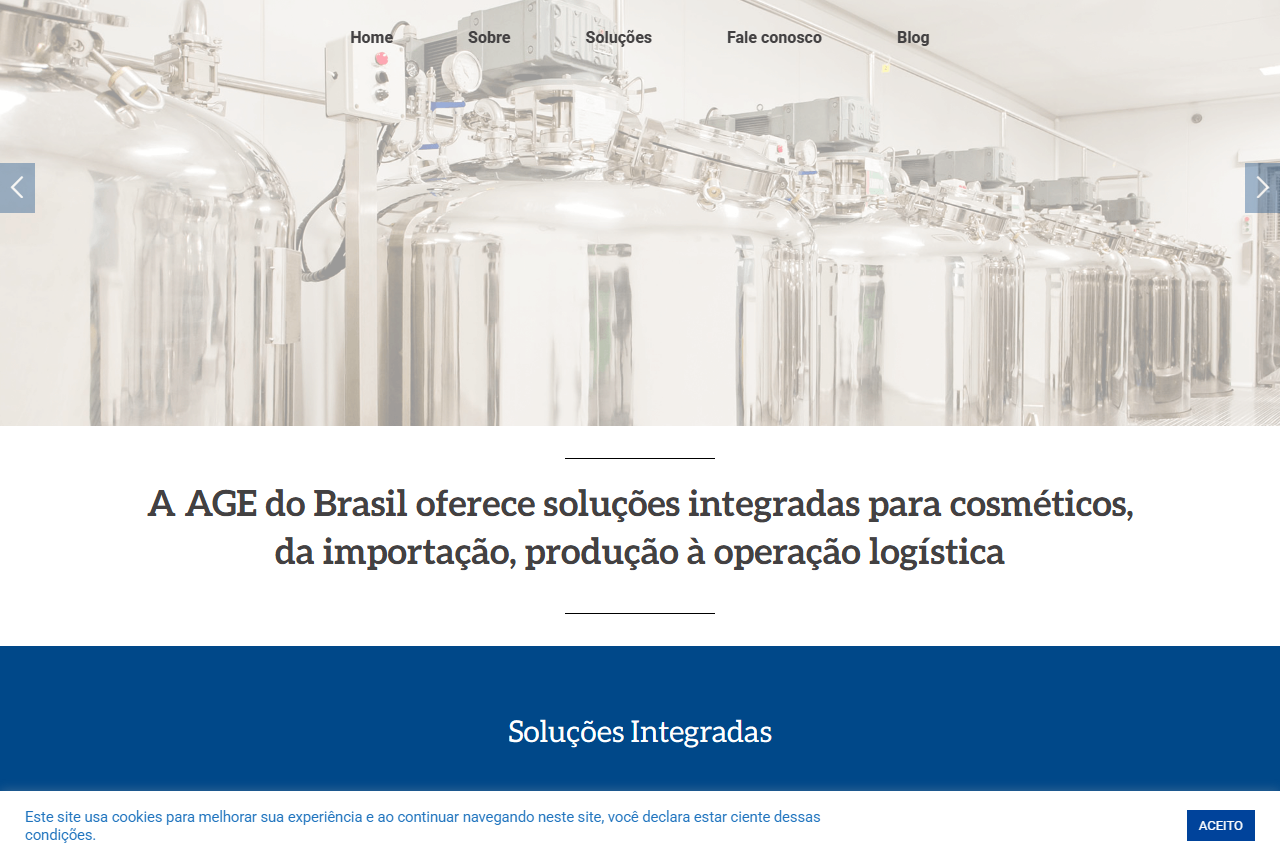
Based in Vinhedo, Sao Paulo, AGE do Brasil describes integrated solutions spanning importation, production and logistics, with legal, accounting and regulatory support attached to the manufacturing offer. It is positioned less as a specialist formulator than as a single operating counterparty for brands entering the Brazilian market.
Website: agedobrasil.com.br
Eco Beauty
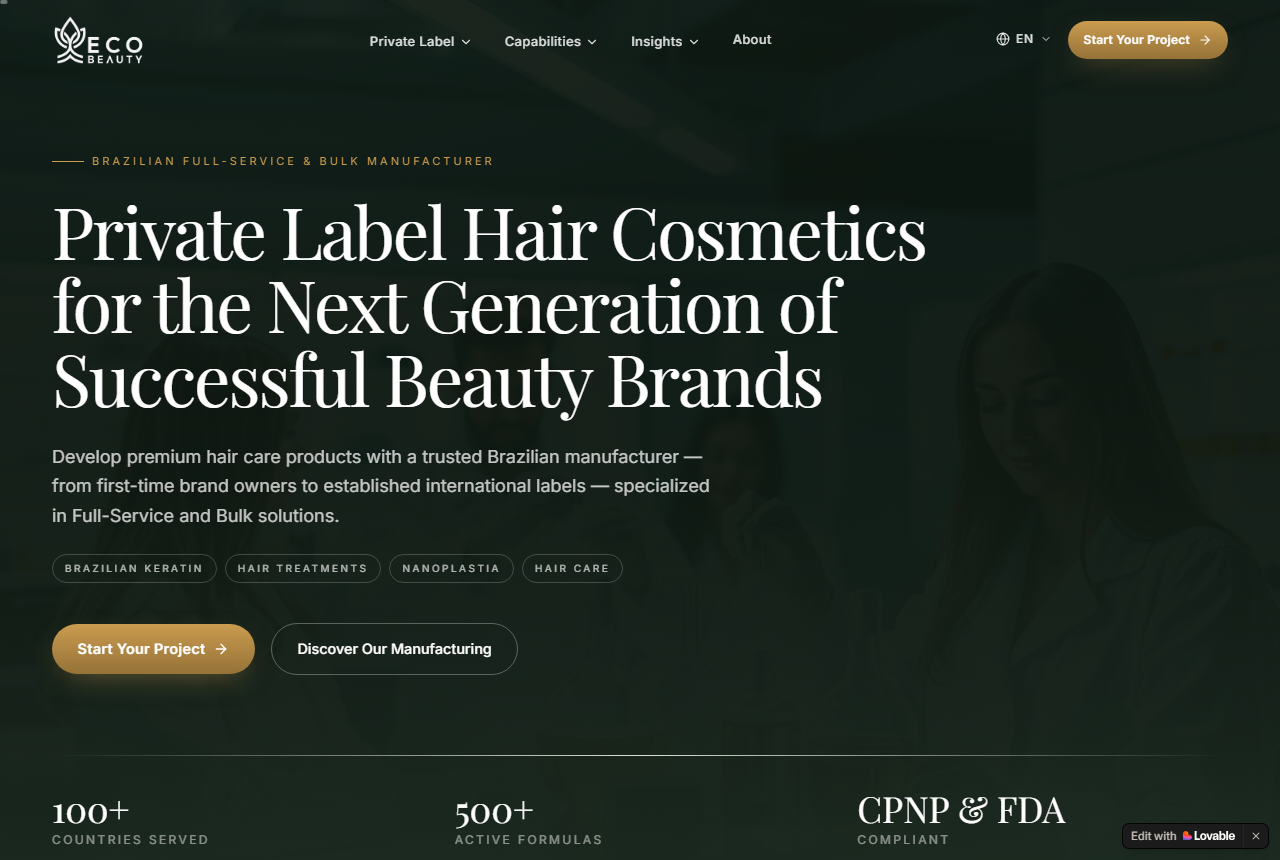
Eco Beauty, based in Campinas, Sao Paulo, specialises in professional hair chemistry — keratin, protein and nanoplastia smoothing systems, bleaches, scalp treatments and curl activators — with a stated minimum of 300 litres per SKU under both full-service and bulk models. The company states presence in over 100 countries and advertises European Union and CPNP dossier support.
Website: ecobeauty.ind.br
Florus Brasil
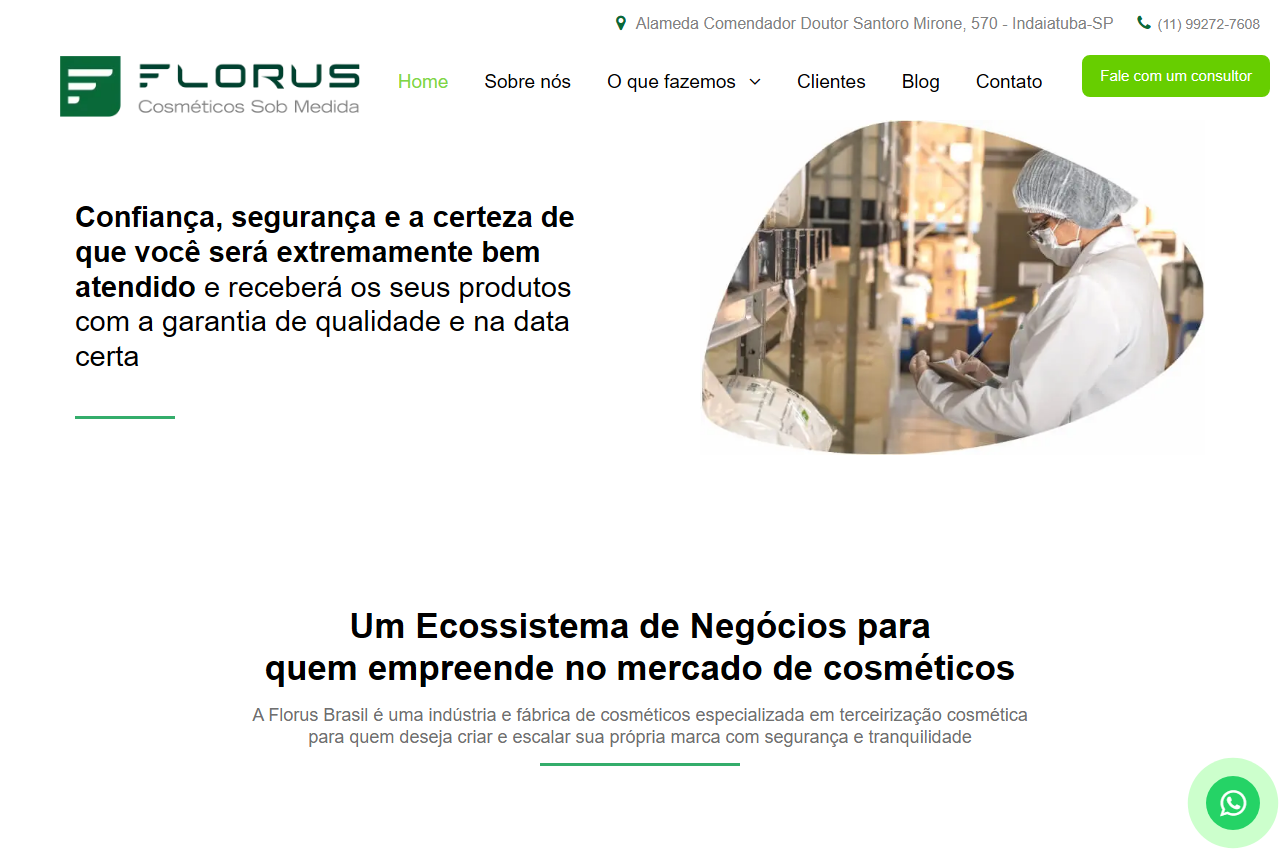
Operating from Indaiatuba, Sao Paulo since 2002, Florus publishes figures of more than 600 brands served, over 3,600 available formulas and daily capacity above 20,000 units, alongside ANVISA regularisation guidance. Its large stock-formula library suits brands that need speed to market rather than a bespoke development.
Website: florus.com.br
HRT Cosmeticos
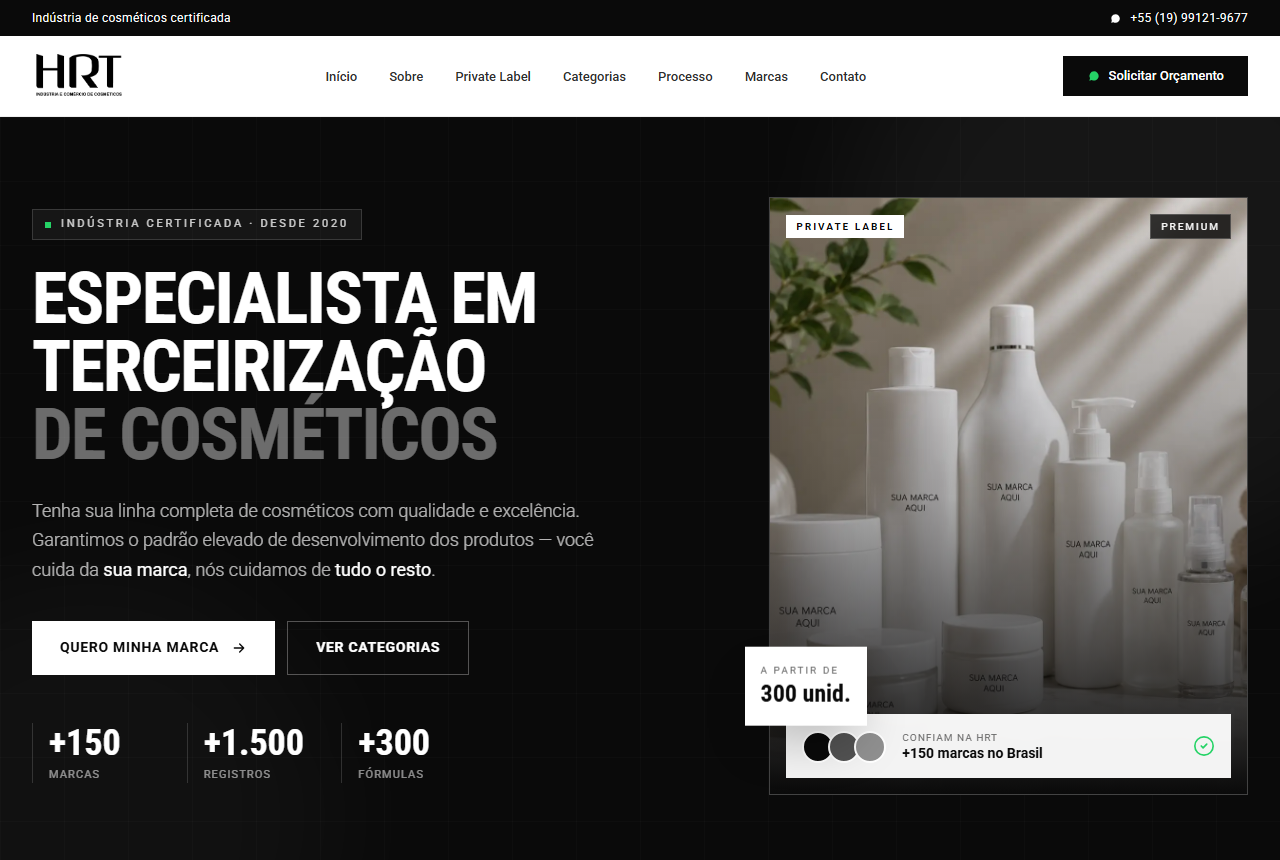
HRT Cosmeticos is a Campinas-based private-label manufacturer founded in 2020, according to the structured data published on its own site, offering a stated starting batch of 300 units per SKU across more than 300 formulas. It is the newest company on this list and is aimed at brands validating a concept at small scale.
Website: hrtcosmeticos.com.br
Larimar Cosmeticos
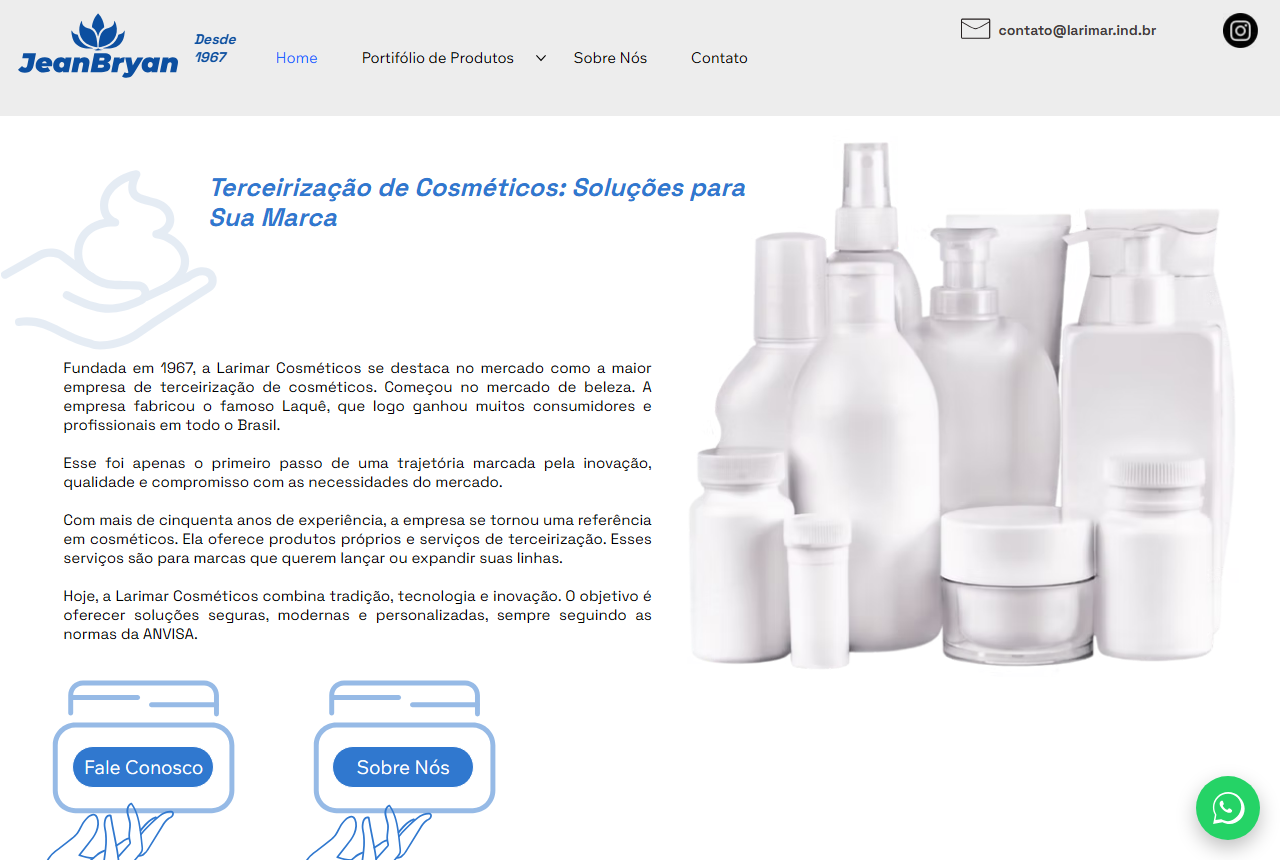
Founded in 1967 and based in Novo Hamburgo, Rio Grande do Sul, Larimar is the longest-established company profiled here and the only one outside the Sao Paulo and Parana axis. Its published portfolio exceeds 120 products across creams, deodorants, hair and professional lines, sun care and vegan formats, and it markets small production runs explicitly. The company also operates its own consumer brand, Jean Bryan.
Website: larimarcosmeticos.com.br
Leclair Cosmeticos
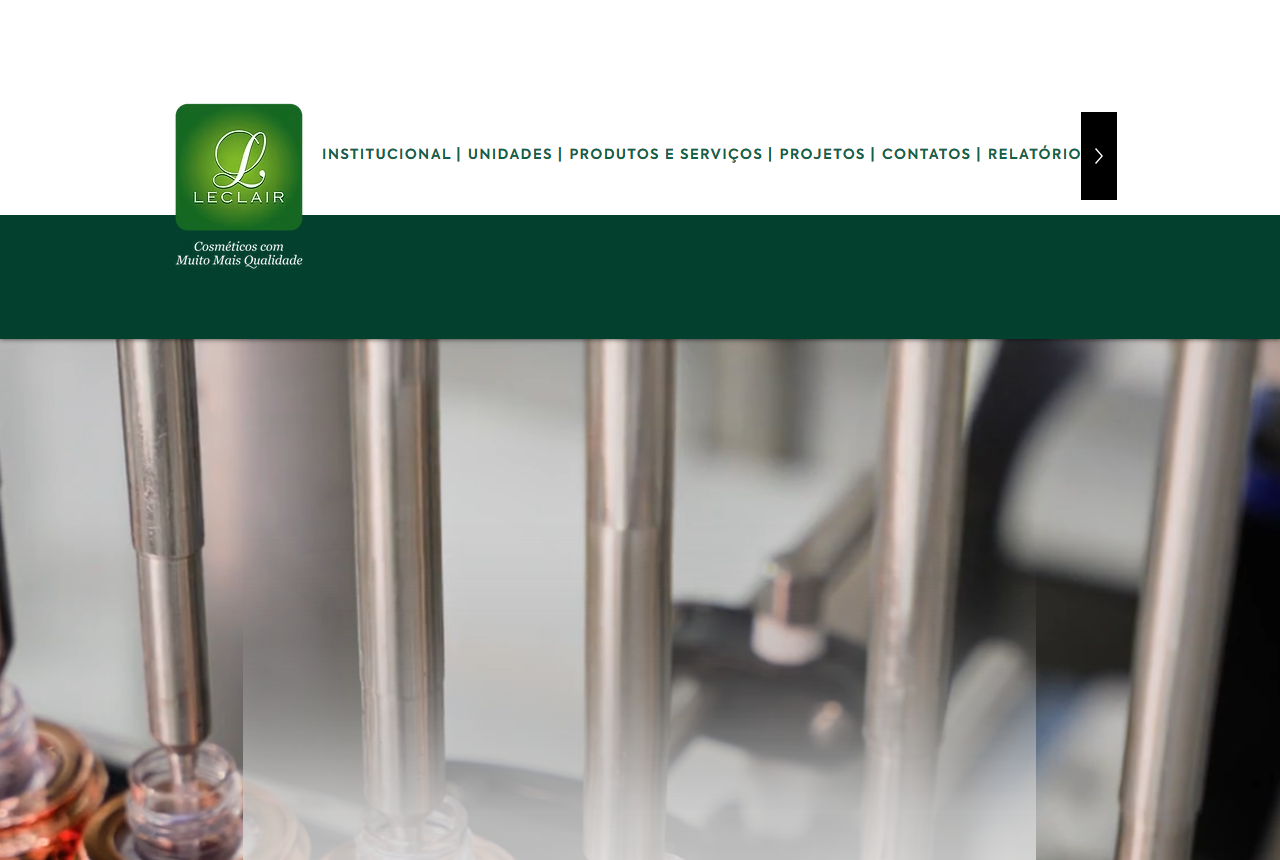
Grupo Leclair is a multi-site industrial group headquartered in Sao Jose dos Pinhais, Parana, with a further unit in Bauru, Sao Paulo, plus separate storage and packaging facilities. It manufactures across personal hygiene, perfumery and cosmetics, with bar soap, creams and lotions and kit assembly as stated specialisms.
Website: grupoleclair.com.br
Lipson Cosmeticos
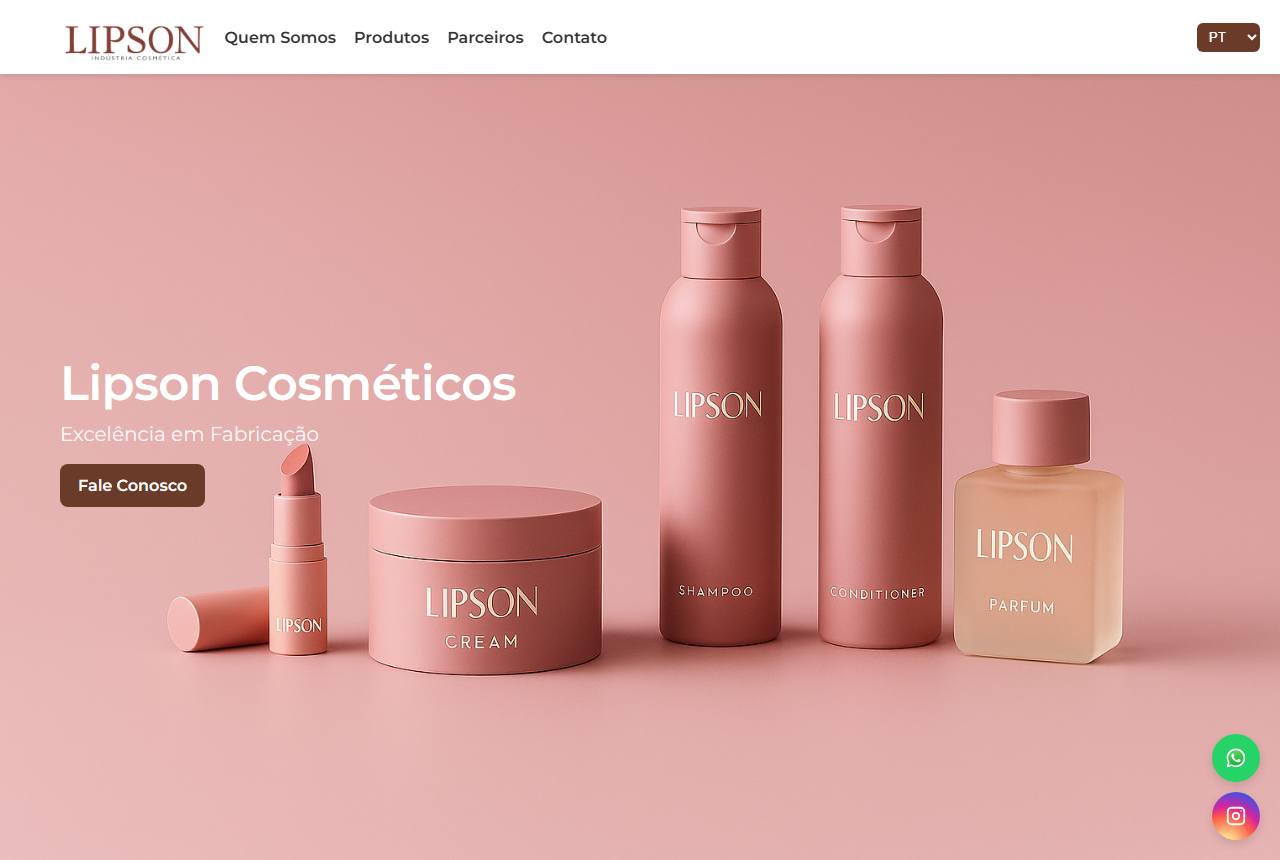
Lipson Cosmeticos, based in Diadema in the industrial belt south of Sao Paulo city, states more than 30 years of operation and offers both full-service development and industrialisation of client-supplied formulas. Its published lines cover body, colour cosmetics, skin, sun, hair and fragrance, with in-house quality control, microbiology, quality assurance and regulatory affairs functions.
Website: lipson.com.br
Private Cosmeticos
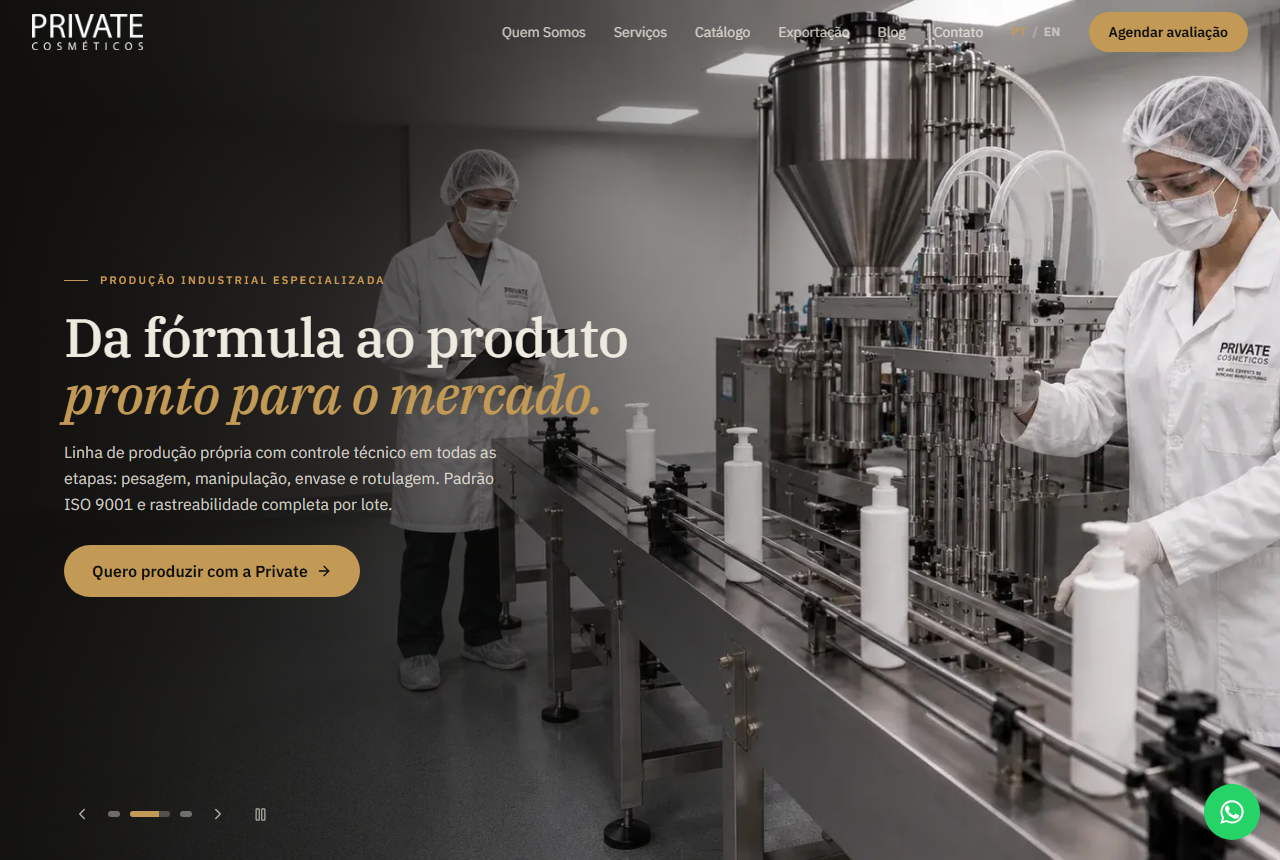
Private Cosmeticos operates from Valinhos, Sao Paulo and publishes the most export-oriented documentation position of the ten, stating ISO 9001 certification alongside ANVISA compliance and support for CPNP, United States FDA and halal files across ten product lines. The company states more than 200 brands developed.
Website: privatecosmeticos.com.br
Revitale Cosmeticos
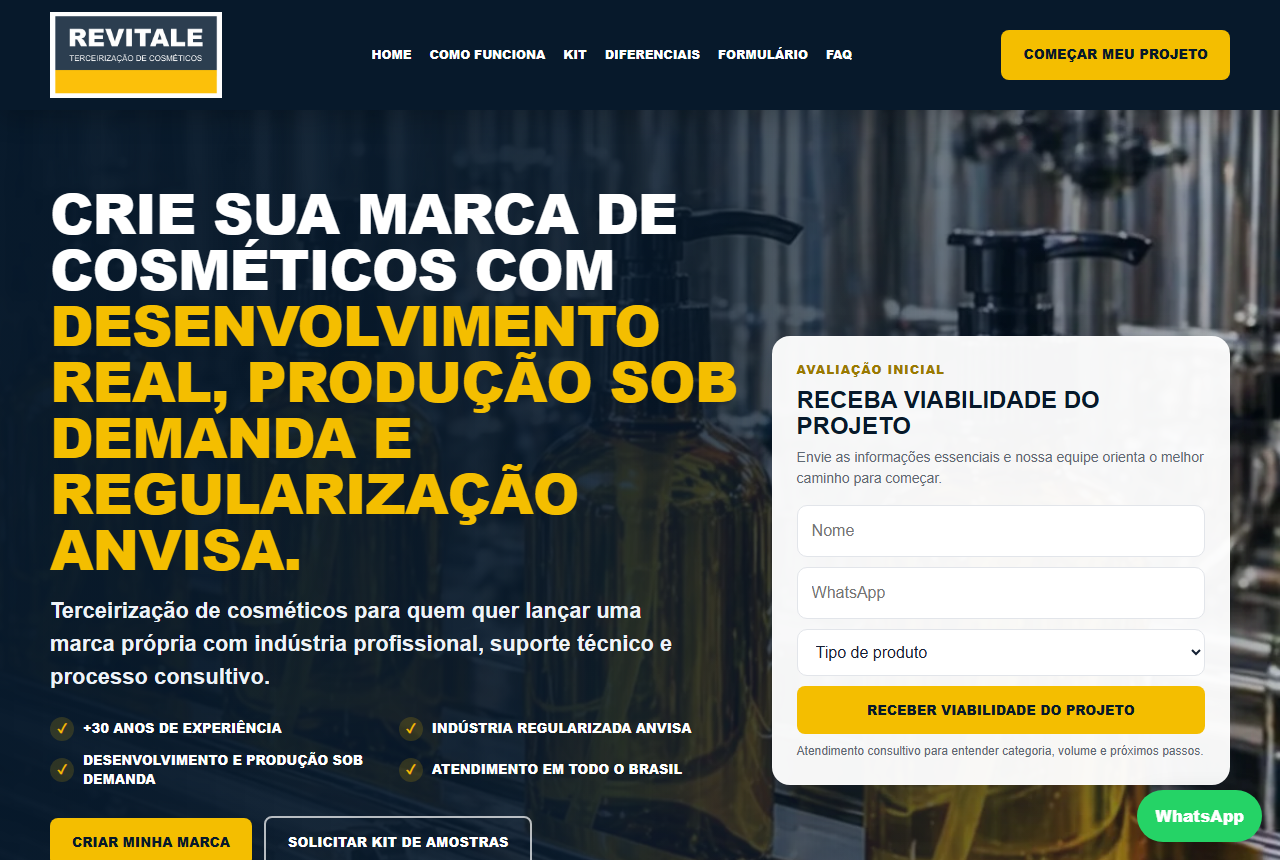
Based in Guarulhos, Sao Paulo, Revitale states more than 30 years in the market and publishes minimum order quantities by pack format — 300 units for perfumes, body splash, shampoos and conditioners, 500 for pump bottles and jars, and 1,500 for tubes. Its catalogue is weighted towards fragrance, body splash and home fragrance.
Website: revitalecosmeticos.com.br
Universal Chemical
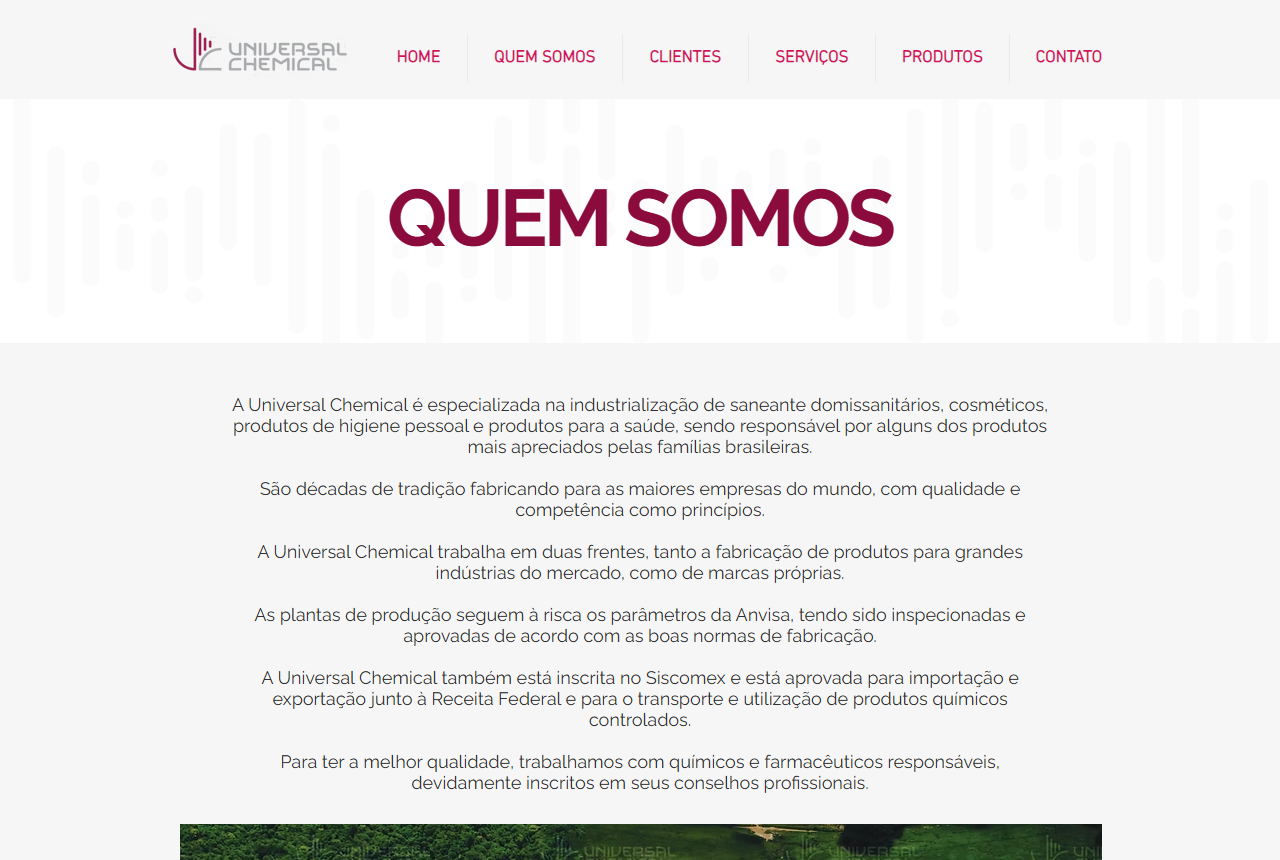
Universal Chemical industrialises household sanitisers, cosmetics, personal hygiene and health products, operating both as a contract producer for large industries and as a private-label supplier to retail. Public Brazilian company records give an incorporation date of 1990 and a plant address in Sarapui, in the Sorocaba region of Sao Paulo state. The company states ANVISA-inspected plants and Siscomex registration.
Website: universalchemical.com.br
What to compare when evaluating any manufacturer
The questions below apply to a factory in Brazil, Malaysia, Korea or anywhere else. They are ordered so that the ones most likely to disqualify a supplier come first.
| Comparison point | What to ask for | Why it decides the outcome |
|---|---|---|
| Regulatory fit for your market | Full quantitative ingredient list with INCI names; manufacturer declaration; GMP evidence for the named site | An ingredient permitted in the factory’s home market may be restricted in yours. This is the fastest way to eliminate an unsuitable supplier. |
| Certification status | Certificate copies with issuing body, scope and expiry; the site address on the certificate | ISO 9001 covers a quality management system, not cosmetic GMP. The two are frequently presented interchangeably in supplier marketing. |
| Minimum order quantity | MOQ stated by pack format, not by product | Packaging minimums usually set the real floor. A 300-unit filling minimum means little if the bottle carries a 5,000-unit tooling run. |
| Formula ownership | Written position on exclusivity and IP for any formula the factory develops | A stock formula can be sold to a competitor. This determines whether you are building an asset or renting one. |
| Total lead time | Development, sampling, approval, production and shipping stated separately | Quoted production time is rarely the constraint. Approvals and freight usually are. |
| Landed cost | Unit price plus freight, insurance, duty, sales tax, clearance and inland delivery | Quoted unit price is not comparable across origins. Landed cost is. |
| Testing scope | Which stability, compatibility, microbiological and claim tests are included and which are billed separately | Test scope is the most common source of unbudgeted cost between quotation and first batch. |
| Commercial exposure | Deposit percentage, payment milestones, inspection rights before shipment | A long lead time paid largely in advance against an unaudited counterparty is a real financial risk. |
Based on ORIZI Group’s manufacturing experience, the two items on this list that most often derail a project are packaging minimums and test scope — not unit price. Brand owners tend to negotiate hard on the number in the quotation and accept the surrounding assumptions without examining them, then discover the true first-order cost several weeks later when tooling and testing are itemised.
Looking Beyond Brazil for a Manufacturing Partner?
Brazil is a strong choice for a narrow set of requirements: professional hair smoothing and treatment systems, distinctive fragrance development, and industrial soap at volume. For brands whose priorities are proximity, shorter lead times, halal certification or ASEAN regulatory alignment, a manufacturing partner in Southeast Asia will usually serve the same brief better.
ORIZI Group is a Malaysia-based OEM and ODM manufacturer operating under ISO 22716 cosmetic Good Manufacturing Practice and holding halal certification, serving cosmetics, personal care, health and nutrition brands across the region. Our OEM cosmetics manufacturing and private label and ODM teams handle formulation, stability and packaging development in-house, and our regulatory affairs consulting team supports product notification and documentation for Malaysian and regional markets.
For brand owners weighing Brazil against a regional partner, the honest comparison is not about capability in the abstract but about total elapsed time, landed cost and regulatory route. If you would like that comparison run against a specific product brief, contact our team and we will set out what is realistic for your format, volume and target market.
Frequently asked questions
What does terceirizacao mean in the Brazilian cosmetics industry?
Terceirizacao is the Brazilian term for outsourced manufacturing, and it corresponds closely to contract manufacturing in English. Brazilian factories generally divide it into two models: full service, where the manufacturer develops the formula, sources packaging and handles registration, and industrializacao, where the client supplies the formula and specification and purchases production capacity only. Price, lead time and formula ownership all differ between the two, so a quotation should always state which model it refers to.
What is the minimum order quantity for cosmetics manufacturing in Brazil?
It varies by manufacturer and by packaging format rather than by product. At the private-label end, HRT Cosmeticos publishes a starting batch of 300 units per SKU and Revitale Cosmeticos publishes 300 units for perfumes and shampoos, 500 for pump bottles and jars, and 1,500 for tubes. Bulk suppliers quote by volume instead, with Eco Beauty stating 300 litres per SKU. Large industrial groups work at considerably higher volumes. All figures are company-stated as of August 2026.
Does an ANVISA registration allow a product to be sold outside Brazil?
No. ANVISA authorisation and Brazilian product registration apply within Brazil only. A product manufactured in Brazil and sold elsewhere must meet the destination market’s own requirements: European Union sales need a responsible person, a safety assessment and CPNP notification; Malaysian sales require notification with the National Pharmaceutical Regulatory Agency through the Quest3+ system; other markets have their own regimes. A Brazilian factory’s ANVISA status is useful supporting evidence of manufacturing standards, not a substitute for local compliance.
Which cosmetic categories is Brazil genuinely strongest in?
Professional hair chemistry above all. Brazilian keratin, protein and nanoplastia smoothing systems became international category names because Brazilian formulators led their development, supported by one of the world’s largest professional haircare markets. Fragrance and body-splash development is a second area of real depth, reflecting Brazil’s large domestic perfumery culture, and industrial bar soap is a third, since few private-label manufacturers anywhere operate soap plant. Outside these categories, other origins are usually more competitive on cost or lead time.
Sources and limitations
Company information in this article was read from each manufacturer’s official website in August 2026, except where stated: Universal Chemical’s 1990 incorporation date and Sarapui plant address come from public Brazilian company records, and HRT Cosmeticos’ 2020 founding date comes from structured data published on its own website. Screenshots were captured from each company’s public homepage in August 2026, other than Universal Chemical, captured from its company page.
ORIZI Group has not visited, audited or inspected any of the manufacturers named here, has not tested any of their products, has not verified their certifications with the issuing bodies, and has no commercial relationship with any of them. Minimum order quantities, capacities, formula counts and certification claims are company-stated and change over time. Regulatory information is general guidance and not legal advice; confirm current requirements with the relevant authority before acting.
References: ANVISA cosmetics portal; ABIHPEC, the Brazilian Association of the Personal Hygiene, Perfumery and Cosmetics Industry; Siscomex; ISO 22716:2007.
Update history: 14 August 2026 — first published.
Conclusion
Brazil is a serious manufacturing origin that is frequently overlooked and, just as frequently, approached for the wrong products. Its strengths are concentrated and real; its weaknesses for a distant buyer — freight time, uneven export documentation and regulatory distance from ASEAN — are equally concentrated and equally real. The right way to use a list like this is not to pick a name from it, but to test whether the category you are launching is one where Brazilian capability justifies the distance. If it is not, a closer partner will almost always deliver the same product faster and at a lower landed cost.
Comparing Latin American production bases? Our companion guide to OEM/ODM cosmetic suppliers in Mexico covers the region’s other major contract-manufacturing cluster, its COFEPRIS regime and its notably low entry minimums.